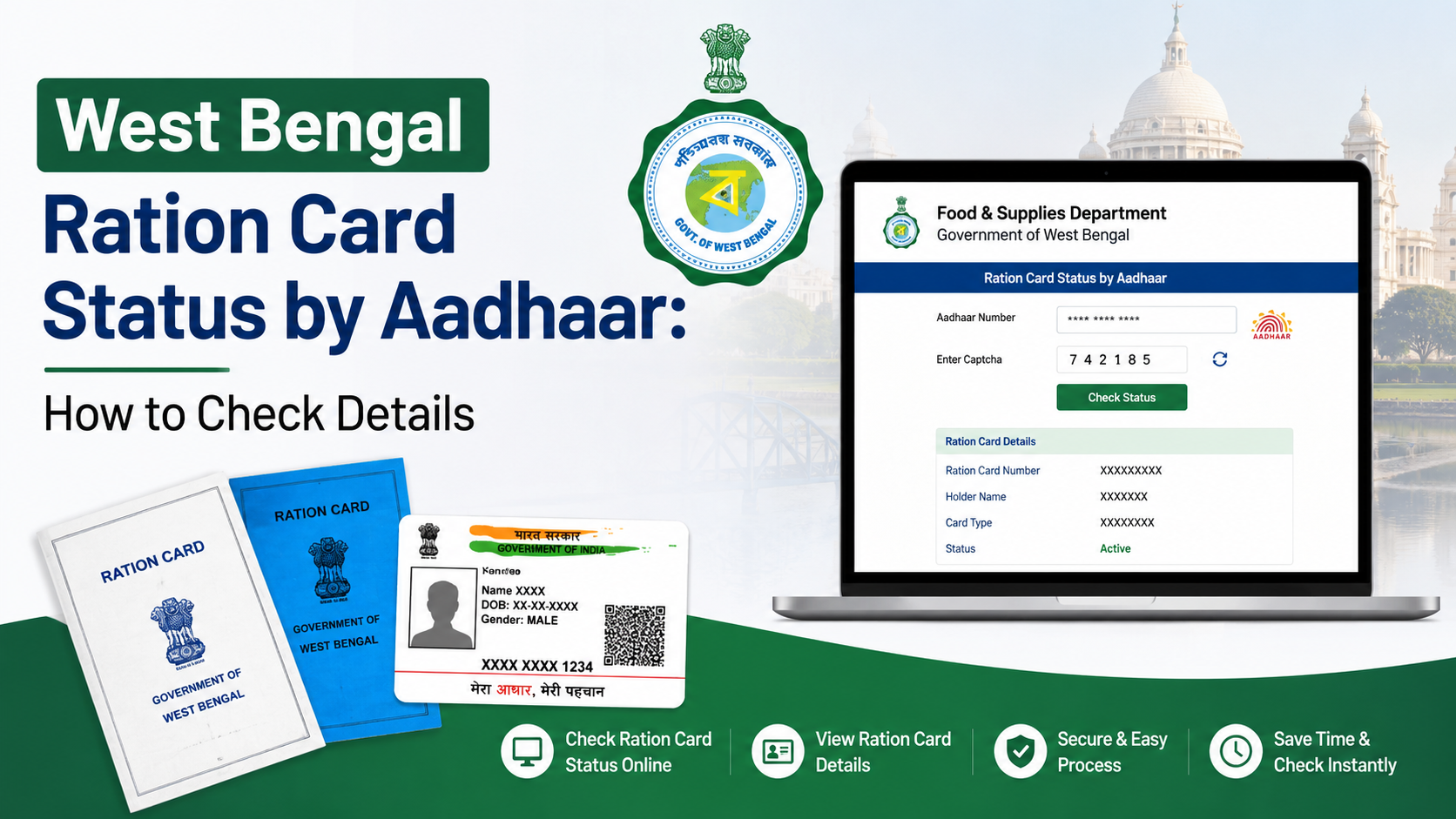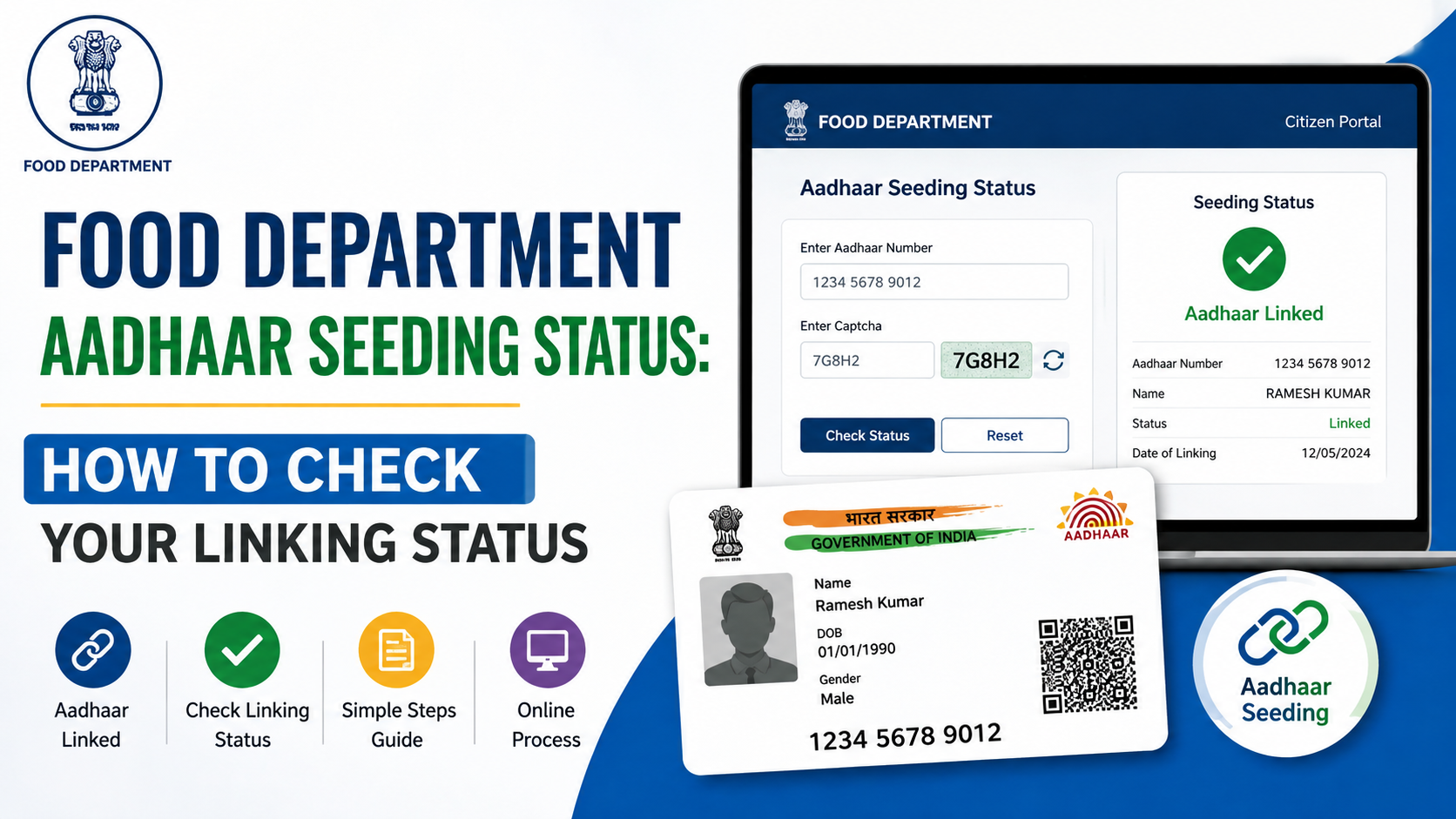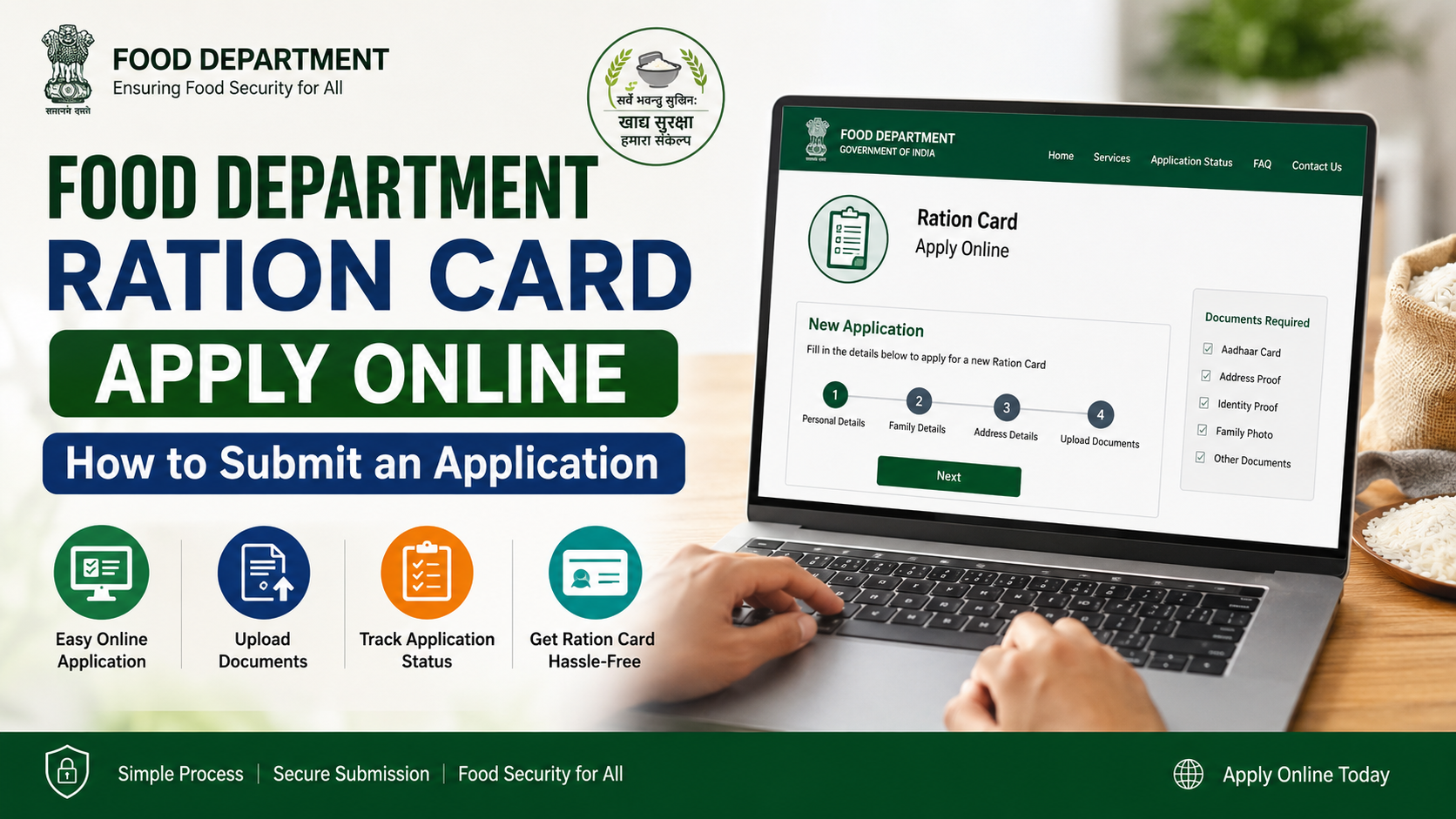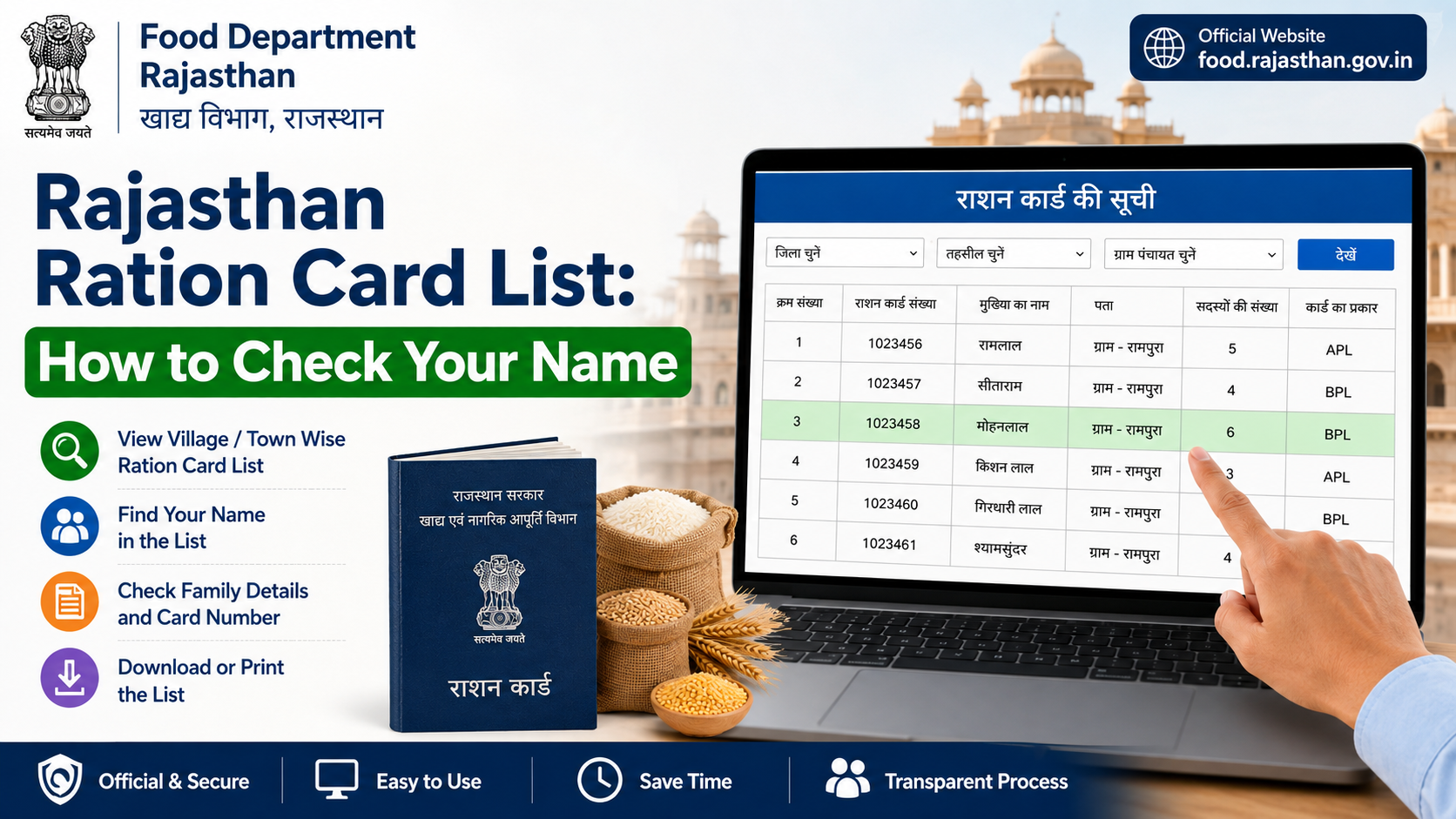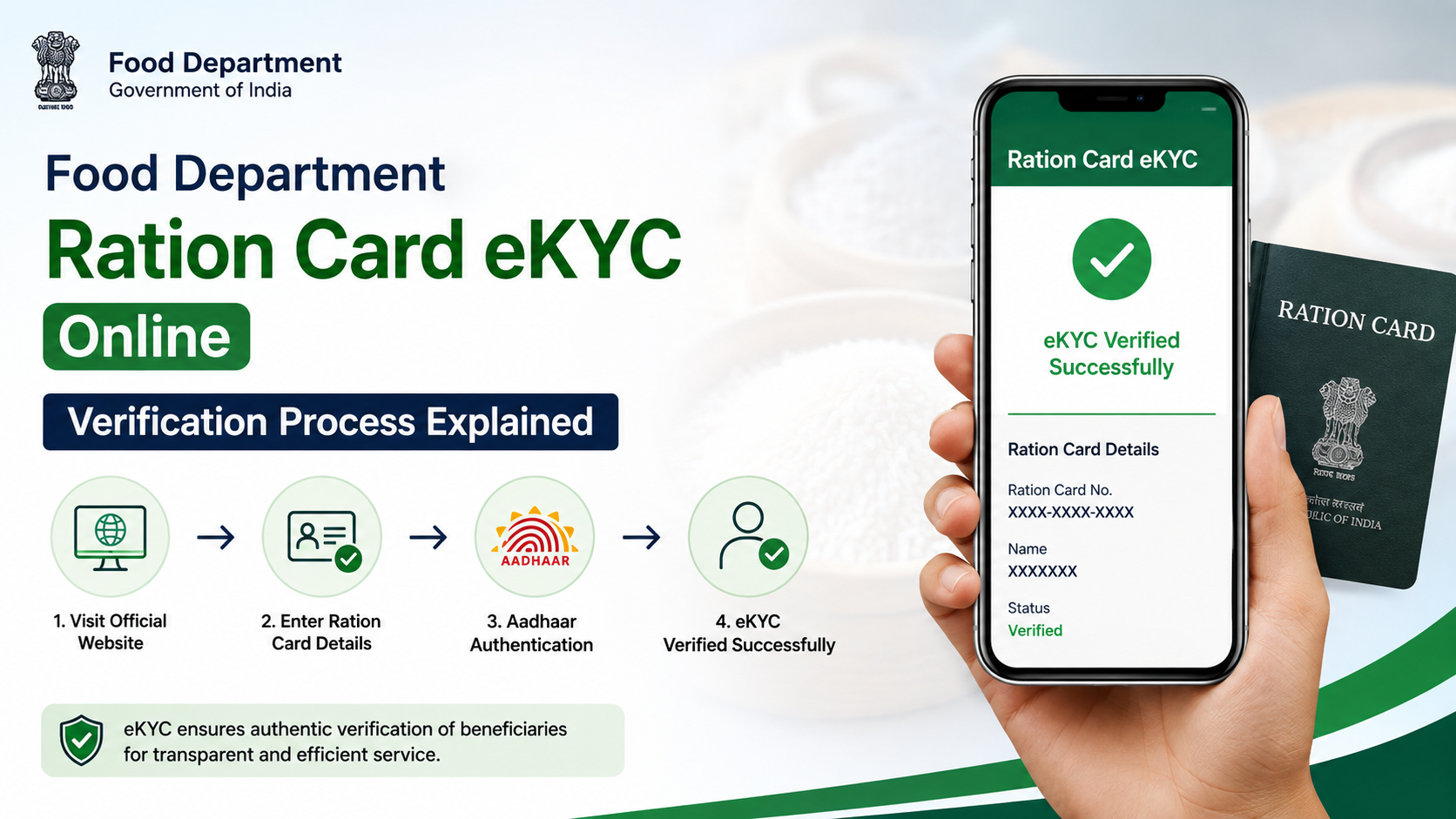
Ration-card eKYC links each beneficiary’s identity with the Public Distribution System (PDS) record using Aadhaar-based authentication. The process helps the Food Department validate household members, reduce duplicate records and support portability under schemes such as One Nation One Ration Card (ONORC).
However, there is no single nationwide website where every beneficiary completes eKYC in exactly the same way. Ration-card administration is handled by individual State Governments and Union Territory (UT) administrations. The National Food Security Act (NFSA) portal provides links to official state and UT portals, while many eKYC requests are completed through a Fair Price Shop (FPS) ePoS device.
This guide explains the current food department ration card eKYC online process, required documents, authentication methods, status checks, common errors and important safeguards.
Key Takeaways
- Ration-card eKYC normally uses Aadhaar OTP, fingerprint or iris authentication, depending on the state’s system.
- The official process varies by State or UT; use the portal listed on the NFSA website.
- Many states complete beneficiary eKYC at the assigned Fair Price Shop through an ePoS machine.
- All household members listed on the ration card may need separate verification.
- Failed biometric authentication should trigger an exception or physical-verification process; genuine beneficiaries should not lose entitlements solely because of technical failure.
- Never share Aadhaar OTPs with unauthorised agents or use unofficial websites claiming to update ration-card eKYC.
What Is Ration Card eKYC?
Electronic Know Your Customer (eKYC) is a digital identity-verification process. During ration-card eKYC, the beneficiary gives consent for an authorised requesting entity to submit Aadhaar details and an authentication factor—such as an OTP or biometric—to UIDAI.
UIDAI verifies the information against its Central Identities Data Repository and returns an authentication response. UIDAI explains that eKYC authentication is performed using OTP and/or biometric authentication, including fingerprint or iris-based methods. The requesting agency then uses the returned information to validate the beneficiary against the PDS database. UIDAI Authentication Ecosystem
The Department of Food and Public Distribution (DFPD) describes the ration eKYC exercise as a way for the beneficiary to authorise UIDAI to provide basic demographic information to the State Food and Civil Supplies Department for validation. The department compares the eKYC data with the ration-card record. DFPD eKYC advisory PDF
eKYC is different from simply entering an Aadhaar number into a form. It requires an authentication transaction and consent.
Who Handles Ration Card eKYC in India?
The responsibility is divided between central and state authorities:
| Authority or platform | Main role |
|---|---|
| State Food and Civil Supplies Department | Maintains ration-card records and determines the state procedure |
| Fair Price Shop (FPS) | Provides local ePoS-based authentication in many states |
| UIDAI | Performs Aadhaar authentication and returns a success or failure response |
| NFSA portal | Links users to official State and UT ration-card portals |
| DFPD | Issues national PDS guidance and oversees reforms such as ONORC |
The NFSA portal’s “Ration Card Details on State-UT Portals” page lists official links for states and UTs, including Bihar, Delhi, Gujarat, Karnataka, Maharashtra, Rajasthan, Tamil Nadu, Telangana, Uttar Pradesh and West Bengal. NFSA State-UT portal directory
Because each state operates its own PDS technology, menu names such as “Aadhaar Seeding,” “eKYC,” “Member Verification” or “Know Your Ration Card” may differ.
Food Department Ration Card eKYC Online: Step-by-Step Process
Step 1: Open the official state or UT portal
Visit the NFSA state-portal directory and select your state or UT. Follow the link to the official Food Department or Ration Card Management System website.
Avoid relying on search advertisements, private agents or websites that ask for payment or request your Aadhaar OTP. Check that the address belongs to a government domain such as gov.in, nic.in or an officially linked state portal.
Step 2: Find the eKYC or Aadhaar service
Look for a service labelled one of the following:
- Ration-card eKYC
- Aadhaar seeding or Aadhaar linking
- Member Aadhaar verification
- Ration-card beneficiary verification
- Ration-card correction or update
Some portals allow only status checking online and direct beneficiaries to an FPS for biometric authentication. Others may provide an online Aadhaar-OTP workflow.
Step 3: Enter ration-card and beneficiary details
Depending on the state portal, you may be asked for:
- Ration-card number
- Aadhaar number of the beneficiary
- Mobile number registered with Aadhaar or the ration card
- District, block, village or urban local-body details
- Captcha or login credentials
Enter details exactly as shown on official records. A mismatch in name, date of birth, gender or other demographic information can cause authentication failure.
Step 4: Give consent and complete authentication
If OTP authentication is available, request the OTP and enter it only on the official portal. The OTP is sent to the mobile number registered with Aadhaar.
If the state requires biometric verification, visit the assigned FPS. The dealer uses an ePoS device to submit a fingerprint or iris authentication request. UIDAI states that eKYC authentication is based on OTP and/or biometric authentication through an authorised requesting entity. UIDAI Authentication Ecosystem
Step 5: Verify every listed household member
The DFPD advisory instructs that all household members whose names appear on an NFSA ration card may be asked to visit the FPS for eKYC. A cardholder’s verification does not automatically verify every other member.
Children, elderly people and members who live away from home may require special handling. Ask the state Food Department or FPS dealer whether a local exception process, assisted visit or physical verification is available.
Step 6: Save the acknowledgement or reference number
After submitting eKYC, save:
- Application or transaction number
- Screenshot of the confirmation page
- SMS confirmation
- Date and location of authentication
- FPS receipt, if issued
These details help when tracking approval or filing a complaint.
How to Complete eKYC at a Fair Price Shop
Online instructions often create the impression that ration eKYC can always be completed from home. In practice, many states use the FPS ePoS device because it supports biometric authentication and links the transaction directly to the PDS database.
The DFPD’s suggested procedure includes the following steps:
- The beneficiary visits the FPS with the ration card details and Aadhaar information.
- The FPS dealer initiates an eKYC request on the ePoS machine.
- The beneficiary authenticates using fingerprint or iris, where enabled.
- If Aadhaar has not been seeded, the department may provisionally seed it after initiating eKYC, subject to state rules.
- A successful authentication is recorded and may be followed by SMS or another approval notification.
- Failed cases can be flagged for physical verification or exception handling.
Visit during non-peak hours if the dealer has assigned time slots. Do not allow eKYC activity to interrupt regular food-grain distribution.
Documents and Information Usually Needed
Requirements vary by state, but beneficiaries should generally keep the following available:
- Ration-card number or a copy of the ration card
- Aadhaar number of each listed member
- Mobile phone linked to Aadhaar, if OTP is used
- Existing PDS or beneficiary ID
- Proof of identity or address, if the department requests correction
- Details of name or demographic discrepancies
A ration card itself is recognised by UIDAI among documents that may be accepted as proof of identity and address for certain Aadhaar services. This does not mean that every state will accept the same documents for ration-card correction; follow the state portal’s list. UIDAI Aadhaar online services
Do not send an unmasked Aadhaar copy through social media or to an unknown intermediary. Provide documents only through the official portal, authorised FPS or government office.
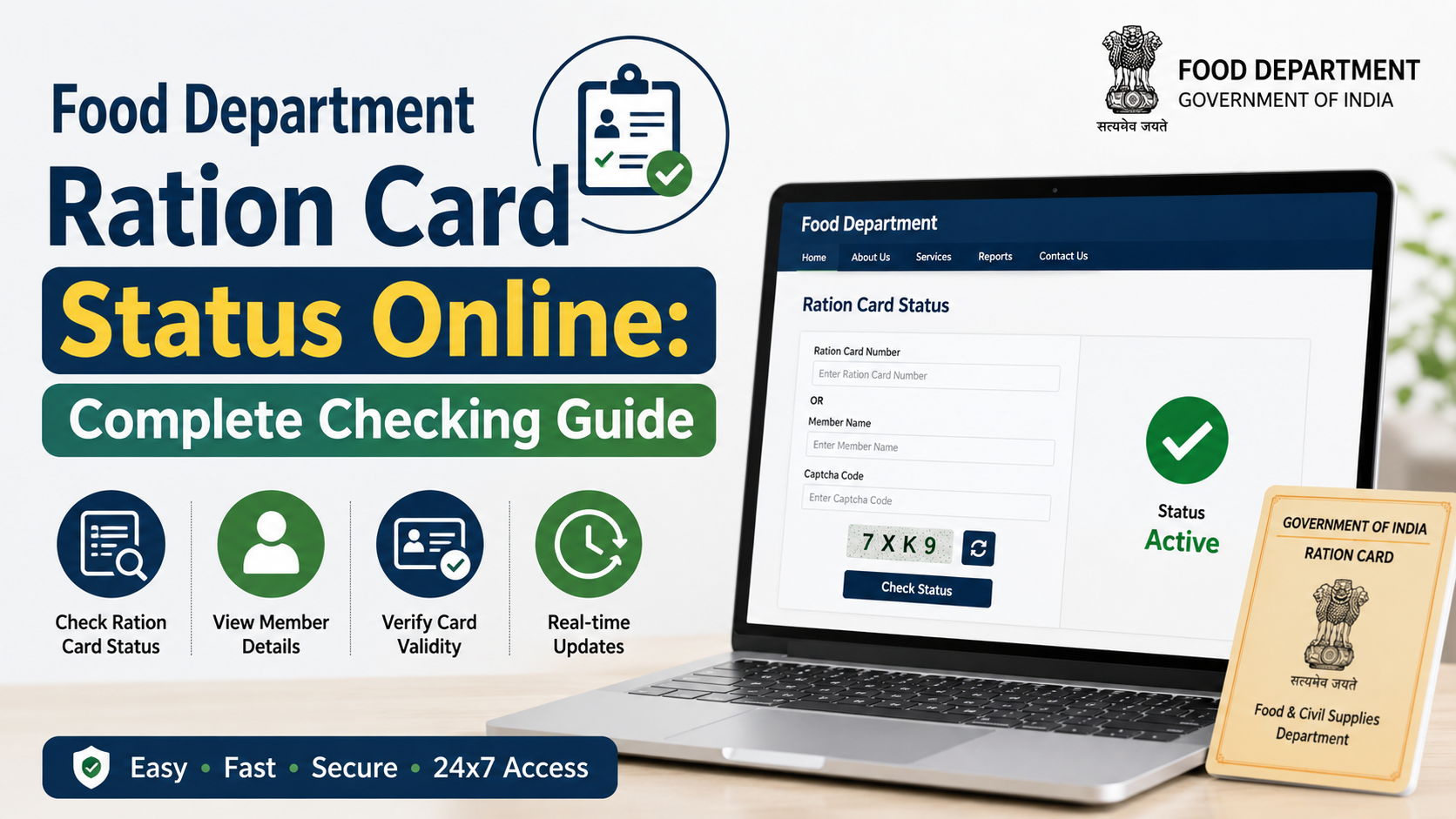
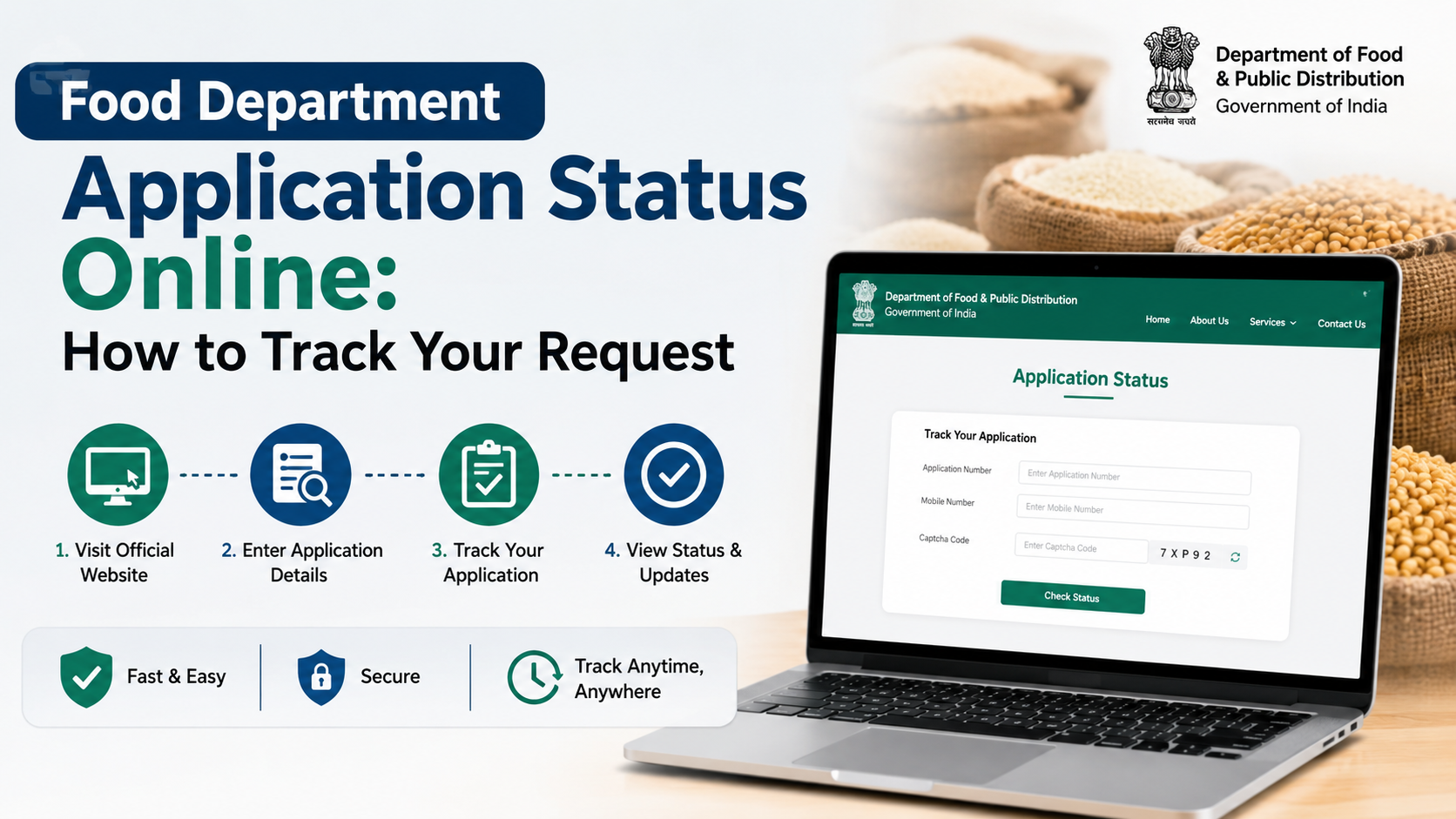
How to Check Ration Card eKYC Status
There is no universal national eKYC-status page for every state. Use one or more of these official routes:
State ration-card portal
Log in with the ration-card number or beneficiary details and open “eKYC Status,” “Aadhaar Seeding Status” or a similar option.
NFSA-linked state report
The NFSA portal links to state-specific ration-card reports and PDS systems. Select your state from the official directory and use the available beneficiary or ration-card search service.
Fair Price Shop or Food Department office
Ask the FPS dealer to check the ePoS transaction status. If the portal shows “pending,” “rejected” or “under verification,” the dealer can usually explain whether another authentication attempt or physical verification is required.
SMS or acknowledgement
Some states send confirmation by SMS. Keep the transaction reference number until the status changes to approved or verified.
What to Do If eKYC Fails
A failed authentication does not always mean that the beneficiary is ineligible. UIDAI identifies poor fingerprint quality, network problems and other technical or biometric limitations as possible causes. It also states that service providers should maintain alternate processes so people are not denied entitlements solely because authentication fails. UIDAI FAQ on rejected authentication
Try these steps:
- Check whether the Aadhaar number was entered correctly.
- Ask the operator to clean the fingerprint scanner and try another finger.
- Retry when the network or ePoS system is working.
- Check whether the name and demographic details match across Aadhaar and the ration-card record.
- Update Aadhaar biometrics or demographic details through an authorised UIDAI channel if necessary.
- Request physical verification or an exception process from the FPS or Food Department.
- Record the error code, date, FPS number and transaction reference.
- Contact the state PDS helpline, commonly listed on the NFSA state page.
Do not pay an unofficial fee to “force” approval. Any applicable service charge should be displayed or confirmed by the department.
Privacy and Security Precautions
Ration-card eKYC involves sensitive identity information. Follow these safeguards:
- Use only official Food Department, NFSA or UIDAI-linked websites.
- Never disclose an Aadhaar OTP over a phone call.
- Confirm that the ePoS operator is processing the request for your ration card.
- Read the consent message before authenticating.
- Collect a receipt or note the transaction ID.
- Check Aadhaar authentication history if you suspect an unauthorised transaction; UIDAI provides transaction date, time, agency name, response and error details. UIDAI Authentication History
- Report suspicious requests to the Food Department, UIDAI or local cybercrime authorities.
Aadhaar authentication returns a verification response to the authorised entity; it is not a substitute for citizenship or domicile proof. UIDAI Authentication Ecosystem
Frequently Asked Questions
Is ration-card eKYC compulsory for every state?
The exact requirement, deadline and enforcement method are decided by the relevant State or UT Food Department. Check the official state portal or ask the assigned FPS for the current instruction. Do not rely on social-media messages claiming a nationwide deadline unless confirmed by an official notice.
Can I complete ration-card eKYC entirely online from home?
Sometimes, but not always. A state may offer Aadhaar OTP verification online, while another may require fingerprint or iris authentication at an FPS ePoS machine. The NFSA portal directs users to state systems because the process is not uniform nationwide.
What if my Aadhaar mobile number is not linked?
OTP-based eKYC may not work until the Aadhaar mobile number is updated through an authorised UIDAI centre. Ask whether your state permits biometric eKYC at an FPS or provides an alternative identification process.
Does eKYC automatically add a new family member?
No. eKYC verifies identity. Adding, deleting or correcting a household member is a separate ration-card modification service governed by the State or UT Food Department.
Can food grains be denied after biometric failure?
UIDAI says beneficiaries should not be denied entitlements solely because of technological or biometric limitations and that alternate authentication or exception processes should exist. Immediately report any denial to the FPS inspector, district Food Department or state PDS helpline.
Conclusion
Food department ration card eKYC online is an Aadhaar-based verification process managed through state PDS portals and, frequently, Fair Price Shop ePoS devices. Start with the official NFSA State-UT directory, follow your state’s instructions, verify each listed household member and keep the transaction acknowledgement.
If OTP or biometric authentication fails, request a retry or the department’s exception and physical-verification procedure. Protect your Aadhaar OTP and use only authorised government channels while completing or checking ration-card eKYC.